FDM, MJF, SLS: when plastic can replace metal, and when it cannot
3D printing will not replace the steel in a machine frame. It does, more and more often, replace machined covers, brackets and adapters. A short guide: technologies, materials and five questions that settle the choice.
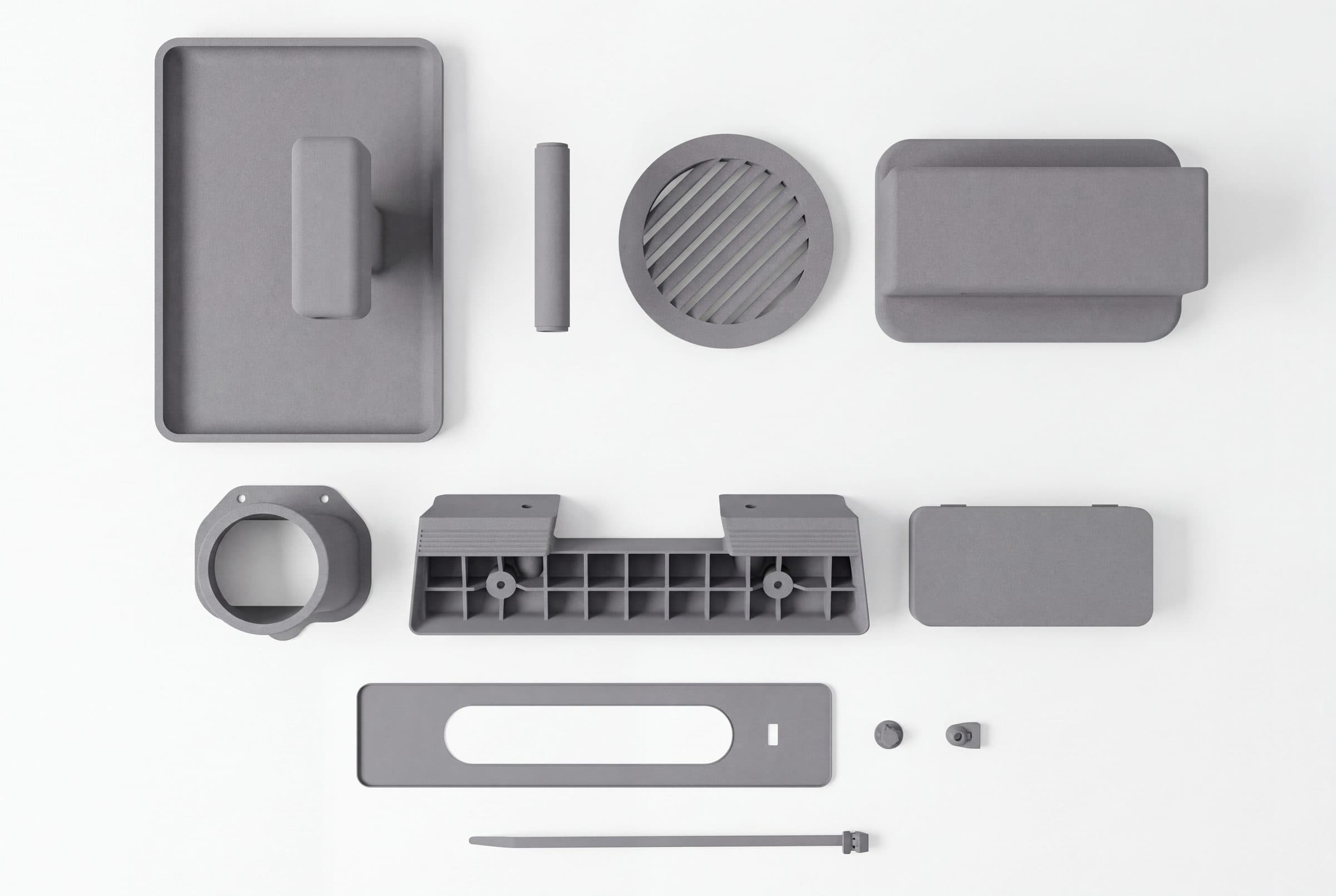
3D printing will not replace the steel in a machine frame or the blade in a guillotine. It does, more and more often, replace machined covers, brackets, gripper adapters and small parts made in runs too small for an injection mould and too costly to machine. Below is a short guide: which technologies, which materials, and how to tell which part can move to plastic.
Three technologies in brief
- FDM (filament printing). Fast and inexpensive: test versions, tooling, low-load parts. Materials: PETG, ASA, ABS, TPU, PLA for mock-ups. The part is anisotropic, meaning weaker along the layers. We run FDM in our own studio.
- MJF and SLS (powder printing). Polyamide fused layer by layer, with no supports, and parts can be stacked in the build chamber. Properties are similar in every direction, and after vapour smoothing the surface comes close to a moulded part. Good from a single piece to short runs. We print with trusted partners, typically in 3 to 5 working days.
- Metal. CNC machining through our partner network: aluminium and steel, plus engineering plastics such as POM and PA6. For where stiffness, temperature, hardness and high forces matter.
Materials for powder printing
- PA12: the standard, all-round material for housings, brackets, adapters and functional parts.
- PA11: tougher, with more elongation. Living hinges, snap fits, straps and parts that flex.
- TPU: an elastomer. Seals, overlays, damping.
What to keep in mind when designing for MJF / SLS
These are guideline values. The exact figures depend on the machine, the material and how the part sits in the chamber, so for critical dimensions we confirm them with the partner before printing.
- Walls: about 1 mm minimum.
- Dimensional accuracy: typically ±0.3% of the dimension, but no tighter than ±0.3 mm.
- Clearances between parts printed together, for example in a mechanism, and small deep holes: the powder needs a way out, so we design them with margin.
- Fine text and raised details: better slightly too thick than too thin.
- A finish (dyeing, vapour smoothing, paint, bead blasting) typically adds 1 to 3 days.
When plastic beats metal
It works best where metal was chosen not because it was needed, but because it was at hand. Industry has well-documented swaps of this kind: machined assembly fixtures and guards replaced with PA12 parts, bearing cages moved from steel and bronze to PA11, robot gripper adapters printed instead of milled. The common thread: lower forces than the material suggested, small quantities and expensive machining.
When metal stays
- Frames, bodies and load-bearing parts under high forces.
- Knives, blades, wear surfaces and sliding pairs under load.
- High operating temperatures, aggressive chemicals, conductivity requirements.
- Parts larger than the build chamber. An example from our own work: in a flower-stem guillotine the frame and blades stay in steel, and only the cover and small mechanism parts are candidates for plastic.
How we decide
Five questions: what load, what temperature, what chemicals, how many pieces, what size. Based on the answers we propose a process and a material, and when in doubt we print a plastic test version before deciding. We handle the design, the test prints and the production coordination ourselves. We work with many print bureaus and machine shops across Poland: powder printing, resin, CNC, machining, bonding, painting.